Searching for scholarships for college students in US usually ends the same way: a dozen listing sites, a dozen email captures, and no idea which deadline is real. This guide fixes that. Every award below links straight to the awarding body's own application page, with the eligibility criteria, the benefits, and the deadline pattern that repeats every year - so the page stays useful whether you land here in September or in April.
Why US College Scholarships Are Worth the Effort
The gap between what colleges advertise and what students actually pay is enormous, and scholarships are what closes it. For 2025-26, average published tuition and fees reached $11,950 at public four-year colleges for in-state students, $31,880 for out-of-state students, $4,150 at public two-year colleges in-district, and $45,000 at private nonprofit four-year institutions. Add housing and food and average total budgets run from $21,320 at a community college to $65,470 at a private nonprofit four-year school.
Yet average net tuition and fees for first-time full-time in-state students at public four-year colleges is estimated at just $2,300 for 2025-26 after inflation adjustment. That difference is grant and scholarship money. Somebody claims it. It may as well be you.
Official cost data: College Board - Trends in College Pricing
The Two Funding Systems You Must Work Separately
Federal and State Aid - One Form Opens Everything
The FAFSA unlocks the Pell Grant, the Federal Supplemental Educational Opportunity Grant, Federal Work-Study, subsidised loans, and most state and institutional grant programmes. It is free, and it is the highest-return hour you will spend on your education.
The form opens each autumn for the following academic year and uses your tax return from two years earlier - the "prior-prior year" rule. The federal closing deadline sits nearly two years out, which lulls students into waiting. Do not. Several states award grants until the money runs out, others have hard cutoffs as early as December or January, and many colleges set priority dates between November and February. The earliest deadline on your list is the only one that counts.
Official portal: studentaid.gov
Current cycle: The 2027-28 FAFSA opens to the public on October 1, 2026 and uses your 2025 tax return. The federal deadline is June 30, 2028. This cycle also brings pre-populated data for renewals, rewritten plain-language questions, and one reusable parent entry for families with multiple applicants.
Private and Campus Scholarships - A Separate Hunt Entirely
Foundations, employers, professional associations and community groups run their own calendars and applications. So does your own campus. Your financial aid office and academic department administer endowed and alumni-funded awards advertised nowhere except an internal portal - and these are usually the least competitive awards you will ever apply for.
Related: For scholarship types, required documents and a full step-by-step application walkthrough, see our complete guide to scholarships for college students.
Major Scholarships for College Students in the US
Federal Pell Grant
Who can apply:
- Undergraduate students who have not already earned a bachelor's degree
- US citizens or eligible non-citizens
- Demonstrated financial need via the FAFSA
- Satisfactory academic progress maintained
Benefits: The foundation of American undergraduate aid. It is federal aid you don't repay, it works at community colleges as well as four-year institutions, and receiving it unlocks other programmes - most importantly the Gilman Scholarship below. Some students can also receive up to 150% of their yearly award by attending an additional term within the same school year, known as year-round Pell.
Deadline pattern: Tied entirely to the FAFSA. File the week the form opens each autumn.
Current amounts (2026-27, July 1, 2026 - June 30, 2027): Maximum $7,395, minimum $740. A rule now blocks Pell eligibility for students whose Student Aid Index is $14,790 or higher. The Department of Education has warned award levels depend on continued Congressional appropriations and could change.
Official Website: studentaid.gov - Pell Grants · Federal Student Aid announcement
Benjamin A. Gilman International Scholarship
The best-value award in the country for Pell recipients who want to study abroad.
Who can apply:
- US citizen undergraduate students receiving Federal Pell Grant funding at a two-year or four-year college.
- Applicants must be receiving a Pell Grant at application, or prove they will receive one during the programme.
- Enrolled in a credit-bearing study abroad programme or internship, in a country with a US State Department Level 1 or Level 2 Travel Advisory
- No minimum GPA; no minimum programme length requirement.
Benefits: Base award up to $5,000, plus up to $3,000 through the Critical Need Language Award and up to $1,000 for STEM coursework abroad - a total possible $9,000. Funds may cover programme tuition, room and board, books, local transportation, insurance, international airfare, and passport and visa fees. Selection is holistic, weighing essays and the follow-on service proposal as heavily as academics.
Deadline pattern: Two cycles a year. An early-October deadline covers programmes starting roughly December through the following October; a late-February deadline covers programmes starting the following May onward. Advisor certification always falls about a week after the student deadline.
Current cycle: Deadline Thursday, October 1, 2026 at 11:59pm Pacific Time, advisor certification October 8, 2026, for programmes starting December 1, 2026 to October 31, 2027. Applicants notified in December 2026. The next cycle opens mid-January with a February 25, 2027 deadline.
Related: The Gilman-McCain Scholarship provides $5,000 awards to undergraduate child and spousal dependents of active or activated US military personnel.
Official Website: gilmanscholarship.org - deadlines · Gilman-McCain
Jack Kent Cooke Undergraduate Transfer Scholarship
The most generous private award in America for community college students.
Who can apply:
- Current student at an accredited US community college or two-year institution with sophomore status by January 1, 2027, or a recent graduate since spring 2022.
- Planning to enrol full-time in a baccalaureate programme in fall 2027.
- Cumulative undergraduate GPA of 3.50 or better on a 4.0 scale.
- Unmet financial need, with maximum adjusted gross income of $95,000.
- Two recommendations from academic professionals.
Benefits: As much as $55,000 a year for up to three years, awarded as last-dollar funding after all institutional aid - one of the largest private scholarships for community college transfer students in the country. Each award is intended to cover tuition, living expenses, books and required fees for the final two to three years of a bachelor's degree. Scholars also receive multifaceted advising, career and graduate school preparation, and the opportunity to apply for internship stipends, conference and travel stipends, and the Cooke Graduate Scholarship. The foundation has awarded more than $222 million since 2000.
Deadline pattern: Opens in August, closes in early December, for enrolment the following autumn.
Current cycle: Open August 19, 2026 – December 9, 2026.
Official Website: jkcf.org - Undergraduate Transfer Scholarship · How to apply
Fulbright US Student Program
For students in their final undergraduate year and beyond.
Who can apply:
- US citizens or nationals at the application deadline - permanent residents are not eligible.
- Must have a conferred bachelor's degree before the grant period starts, which includes enrolled students graduating before that date.
- Must not already hold a PhD.
- Non-enrolled applicants should have relatively limited professional experience, typically seven years or less.
Benefits: A funded year abroad to pursue graduate study, conduct research, or teach English, in partnership with more than 140 countries. Grant lengths and dates vary by award.
Deadline pattern: The national deadline falls in early October each year. Critically, enrolled students apply through their institution, and the campus Fulbright Program Adviser sets an earlier internal deadline - often weeks ahead. Find that person in September, not October.
Current cycle: The 2027-2028 competition is open, with a national deadline of October 6, 2026 at 5pm Eastern Time. All recommendations must be submitted by that same deadline.
Official Website: us.fulbrightonline.org · Eligibility
The Aid Most Students Never Claim
The four programmes above are competitive national awards. What follows is different - this is money already allocated to your campus, sitting in accounts that are drawn down until empty. Most of it goes unclaimed simply because students don't know to ask. None of it requires a separate application beyond the FAFSA.
Federal Supplemental Educational Opportunity Grant (FSEOG)
Who can apply:
- Undergraduate students pursuing their first bachelor's degree
- Students with exceptional financial need, verified through the FAFSA
- Pell Grant recipients with the lowest Student Aid Index receive priority
- Your school must participate - not all do, so ask the financial aid office directly
Benefits:
- Between $100 and $4,000 per academic year, never repaid
- The cap rises to $4,400 for students on an approved study-abroad programme
- Stacks on top of your Pell Grant rather than replacing it
- Requires no separate application - the FAFSA is the only form
The catch you must understand: FSEOG is campus-based aid. The Department of Education sends each participating school a fixed annual allocation, and once that school's funds are gone, no further awards can be made that year - no matter how eligible you are. This is not an entitlement like Pell.
How to claim it: File the FAFSA as early as possible and meet your college's campus-based aid priority deadline, which is separate from the federal deadline and usually much earlier. Then ask your financial aid office whether the school participates.
Official Website: studentaid.gov - FSEOG
Federal Work-Study
Who can apply:
- Undergraduate and graduate students who demonstrate financial need through the FAFSA
- Students at participating schools - most four-year institutions take part, though some community colleges and for-profit schools do not
- You must accept the offer in your aid package before applying for a position
Benefits:
- Part-time earnings, typically around $1,500 to $2,500 per semester depending on your award
- Positions are legally required to accommodate your class schedule
- On-campus roles are often tied to your field of study, building résumé experience alongside the income
- On-campus students working at least half-time are generally exempt from FICA taxes, saving 7.65% of wages
The benefit almost nobody mentions: Federal Work-Study earnings are excluded from the Student Aid Index calculation on next year's FAFSA. You still report the income, but the formula does not count it against you.
That makes it structurally different from any other job. Earn $3,000 through Work-Study and your SAI is unchanged. Earn the same $3,000 at an off-campus job and it counts as student income, potentially raising your SAI and cutting your need-based aid the following year. A higher hourly wage elsewhere can leave you worse off overall.
Official Website: studentaid.gov - Work-Study
State Grant Programmes
Who can apply:
- Residents of the state, enrolled at an eligible institution - usually one within that state
- Requirements vary enormously, so check your state higher education agency directly
Benefits:
- Frequently the second-largest source of gift aid after Pell
- Many states run both need-based and merit-based tracks, so you may qualify for either
- Some award enough to cover community college tuition and fees entirely
Why this is the strongest argument for filing early: Several states award grants first-come, first-served until the money runs out. Others impose hard cutoffs as early as December or January - months before the federal deadline.
This is the single clearest reason to file the FAFSA in the opening weeks rather than in March. Families who file in October have access to aid that families filing later simply cannot get, regardless of need.
Departmental and Endowed Campus Awards
Who can apply:
- Enrolled students, usually within a specific major, year or department
- Criteria are often narrow: a particular county of origin, a declared minor, an intended career, a named donor's alma mater
Benefits:
- The least competitive money on this entire page. A departmental award may draw a dozen applicants against a national scholarship's twenty thousand
- Often renewable for the remainder of your degree
- Frequently accompanied by faculty recognition that strengthens graduate school references
Why no aggregator lists these: They are administered internally and advertised on department noticeboards, in major-specific newsletters, or on an internal portal that never appears in Google's index. Scholarship databases cannot crawl what is not published.
How to find them:
- Ask your academic department administrator - not the general financial aid desk - what endowed funds exist for students in your major and year
- Ask your financial aid office specifically about institutional and alumni-funded awards, using that phrasing
- Check whether your college maintains an internal scholarship portal; many do, and many students never log in
- Ask your faculty adviser directly, since they often nominate students rather than waiting for applications
A single fifteen-minute conversation here outperforms weeks of scrolling through scholarship databases
Scholarship Deadlines at a Glance
- Gilman International - Up to $9,000 · Pell recipients studying abroad · Closes 1 October 2026, 11:59pm PT · Apply here
- Fulbright US Student Program - Full grant · Final-year and graduate students · Closes 6 October 2026, 5pm ET · Apply here
- Jack Kent Cooke Undergraduate Transfer - Up to $55,000/year · Community college sophomores · Closes 9 December 2026 · Apply here
FAFSA-linked aid - no separate application, but timing decides everything:
- Federal Pell Grant - Up to $7,395 · FAFSA opens 1 October 2026
- FSEOG - $100 to $4,000 · Awarded until your school's allocation runs out
- Federal Work-Study - Roughly $1,500 - $2,500 per semester · Limited campus allocation
- State grants - Varies by state · Several close as early as December
Benefits That Go Beyond the Money
Career Signalling
A named national scholarship tells employers and graduate admissions committees that a competitive panel already vetted you. That third-party verification is difficult to obtain any other way.
Networks and Mentoring
- Cooke Scholars receive ongoing advising and stipend access
- Coca-Cola Scholars join a multi-thousand-strong alumni community
- Gilman recipients build an international profile that reshapes graduate applications years later
Debt You Never Take On
Money not borrowed at eighteen is money not repaid with interest at thirty-five. That gap compounds across an entire career, and it is the most underrated benefit on this list.
How to Apply Without Wasting Months
Build Your Document Pack Once
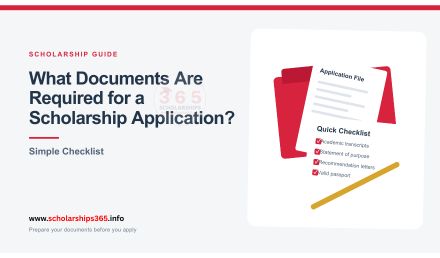
A master résumé, unofficial transcript, activity list with dates and hours, and two recommenders who have already agreed. Most applications draw from the same well.
File the FAFSA the Week It Opens
Early filers tend to receive more aid because much of it is first-come, first-served.
Visit Your Financial Aid Office in Person
Ask what departmental, alumni and endowed awards exist for your major and year. This one conversation outperforms weeks of scrolling.
Write One Strong Essay and Adapt It Honestly
Reviewers spot a recycled essay instantly. Adapt the argument, not just the organisation's name.
Do Not Ignore Small Local Awards
A $1,000 community award with forty applicants pays better per hour than a $20,000 national award with twenty thousand.
Mistakes That Quietly Cost Students Money
- Assuming your family income is "too high" and skipping the FAFSA - institutional formulas are not federal formulas
- Missing advisor certification - Gilman and Fulbright both require campus sign-off after your own submission
- Treating deadlines as midnight when several close at 5pm Eastern
- Paying an application fee - legitimate scholarships never charge
- Applying only in the final year of high school, when sophomores, juniors and transfer students face far thinner competition
Looking Beyond US Borders
Some of the strongest funding for American students sits outside the country. Our roundup of the 10 best American scholarships for undergraduate, masters and PhD study is the natural next read, and the Marshall Scholarship guide covers the most prestigious route for US graduates heading to the UK. For a funded research year in Europe, the Swiss Government Excellence Scholarships accept US applicants.
Because English is your first language, several European systems open up easily - see scholarships in the Netherlands without IELTS and studying in Finland without IELTS on scholarship. High achievers should also review NSHSS scholarships for US students, and our wider scholarships for international students hub covers international applicants too.
Frequently Asked Questions
Can I apply for scholarships if I am already enrolled in college?
Yes, and this is the most common misconception in the entire process. The Gilman International Scholarship, the Jack Kent Cooke Undergraduate Transfer Scholarship and thousands of departmental awards exist specifically for students partway through a degree. Continuing-student awards are usually less competitive than freshman-entry awards, because most students stop applying the moment classes begin.
How much is the Pell Grant right now?
For the 2026-27 award year the maximum is $7,395 and the minimum is $740. Your actual award depends on your Student Aid Index, your cost of attendance and your enrolment intensity, so part-time students receive a proportionally smaller amount. Always confirm the current figure at studentaid.gov before building a budget around it.
When does the FAFSA open each year?
The form normally opens on 1 October for the following academic year, though the exact date has shifted in recent cycles - the 2026-27 form actually opened a week early. It uses tax information from two years prior. Because state and institutional aid is frequently first-come, first-served, filing in the opening weeks rather than months later can meaningfully change your award.
Do I need a high GPA to win scholarships?
It depends entirely on the programme. The Jack Kent Cooke transfer award requires a 3.50 cumulative GPA. The Gilman Scholarship has no minimum GPA at all and uses a holistic review in which essays and your follow-on service proposal carry as much weight as grades. Need-based federal aid depends on financial circumstances rather than academic performance, though you must maintain satisfactory academic progress at your institution.
Are scholarships taxable in the United States?
Amounts used for tuition, required fees, books and required equipment at an eligible institution are generally tax-free for degree candidates. Amounts spent on room, board, travel or optional expenses are generally taxable. Keep records of how every award was spent and consult IRS Publication 970 or a qualified tax professional, since this guide is not tax advice.
Can international students apply for these scholarships?
Most awards in this guide require US citizenship or national status - Gilman, Fulbright US Student and Coca-Cola all do, and Fulbright specifically excludes permanent residents. International students in America should instead target institutional awards from individual universities, which run separate application processes usually tied to admission.
How many scholarships should I apply for?
Aim for a mix rather than a number. Two or three large national awards where you genuinely fit the criteria, plus a steady stream of smaller local and campus awards. Ten well-targeted applications beat fifty rushed ones, because reviewers can immediately spot a generic submission that was written for a different prompt.
What happens if I miss a deadline?
Most competitive programmes accept nothing late under any circumstances - the Coca-Cola Scholars Foundation and the Gilman Program both state this explicitly. However, nearly all of them run annually, and Gilman runs twice a year. Note the date you missed, set a reminder six weeks before the next opening, and use the extra months to build a stronger application rather than a faster one.
Do outside scholarships reduce my other financial aid?
Sometimes, through what is called displacement. Colleges may reduce institutional grant aid when outside scholarships arrive. Report every outside award to your financial aid office and ask them directly to reduce loans and work-study before touching grant aid. Many schools will do this if you ask, and very few will offer it unprompted.
Which scholarship should I apply for first if I am short on time?
Work backwards from the nearest deadline you qualify for. In the current cycle that ordering runs Coca-Cola Scholars, then Gilman and Pell, then Fulbright, then Jack Kent Cooke, then Horatio Alger. Scan the deadline list above, pick the closest one you are eligible for, and start there rather than trying to prepare all of them at once.

![Chevening Scholarship 2027 in UK [Fully Funded Scholarships]](https://scholarships365.info/images/images-data/uk-chevening-scholarship-fully-funded-study-in-uk.jpg)


![Study in Poland Without IELTS on Scholarship [Fully Funded]](https://scholarships365.info/images/images-data/study-in-poland-without-ielts-on-scholarships-fully-funded.jpg)