
Every year, thousands of students look for a way to study a master's degree in Europe without worrying about tuition costs or living expenses. The Erasmus Mundus Scholarship, delivered through Erasmus Mundus Joint Masters (EMJM), is one of the most established answers to that search. Funded by the European Union, it allows students from any country to pursue an internationally recognised master's degree while studying across several universities and countries during the same programme.
Unlike a typical scholarship attached to a single university, Erasmus Mundus is tied to a joint academic model - meaning the degree itself is co-designed and co-delivered by multiple institutions working together. This article breaks down what the scholarship actually is, what it covers, who can apply, and how the overall application process works
What Is the Erasmus Mundus Joint Masters Programme?
Erasmus Mundus Joint Masters are international degree programmes designed and delivered jointly by a consortium of at least three higher education institutions based in different countries. Instead of completing your entire degree at one campus, you move between partner universities as part of the programme structure, combining coursework, research, and often a thesis or internship along the way.
This mobility-based model is intentional. By requiring students to study in more than one country, Erasmus Mundus programmes aim to build graduates with broader academic exposure, cross-cultural adaptability, and a genuinely international outlook - qualities that are increasingly valued by employers and research institutions worldwide.
Because the programmes are backed by the EU's Erasmus+ initiative, most Joint Masters come with attached scholarships, making the degree accessible to talented students regardless of their financial background or nationality.
What Does the Erasmus Mundus Scholarship Cover?
The scholarship is designed to remove financial barriers so students can focus entirely on their studies. In most Erasmus Mundus Joint Masters, the funding package includes:
- Full tuition fee coverage for admitted scholarship holders
- A monthly living allowance to help cover day-to-day expenses
- A contribution toward travel costs between study destinations
- Visa-related expense support, where applicable
- An installation allowance to help students settle into a new country
- Participation costs tied to the specific consortium's requirements
Because each Erasmus Mundus consortium manages its own funding structure, the exact benefits can differ slightly from one Joint Master to another. Always check the official page of your target programme to confirm the precise figures and inclusions before applying.
Erasmus Mundus Scholarship - Key Facts
- Study Level: Master's Degree
- Study Location: Multiple partner universities, typically across Europe
- Degree Type: A joint degree, multiple degrees, or a combination of both, depending on the consortium
- Programme Duration: Generally between 12 and 24 months, depending on the structure of the Joint Master
- Who Can Apply: Students from any country in the world
- Funding Source: European Union, through the Erasmus+ programme
Where Can You Study with Erasmus Mundus?
Since Erasmus Mundus Joint Masters are run by consortiums rather than single universities, your study locations depend entirely on which programme you choose. In practice, most students complete their degree across at least two universities in two different countries, following the mobility route set by that specific Joint Master.
Some programmes are based entirely within Europe, while others include partner universities in eligible non-European countries as well. The only reliable way to know your exact study destinations is to review the official page of the Joint Master you're interested in, which lists its participating institutions, countries, and mobility pattern in detail. You can browse active programmes through the official Erasmus Mundus Catalogue maintained by the European Education and Culture Executive Agency (EACEA).
If you're also comparing other fully funded routes into Europe, the Chevening Scholarship is worth a look for students specifically targeting the UK.
Erasmus Mundus Eligibility Criteria
While every Joint Master sets its own detailed admission standards, most programmes share the following baseline eligibility requirements:
- Applicants from any country in the world may apply - there is no nationality restriction.
- You must hold a bachelor's degree, or be in your final year of bachelor's studies at the time of application.
- Final-year applicants must complete their bachelor's degree before the master's programme begins.
- Applicants with a qualification equivalent to a bachelor's degree may also qualify, provided it is officially recognised under the regulations of the awarding country.
- You must meet the specific academic background required by your chosen field of study.
- You must satisfy the language proficiency requirements set by the individual consortium.
- Some programmes may set additional criteria, such as prior coursework in a related subject or relevant practical experience.
Because eligibility rules vary between programmes, it's worth treating the official website of your selected Erasmus Mundus Joint Master as the final word on admission requirements, rather than relying on general guidelines alone.
How to Apply for the Erasmus Mundus Scholarship
There is no single, centralised application form for Erasmus Mundus - each Joint Master manages its own admissions process independently. In general, the process follows these stages:
- Browse the Erasmus Mundus Catalogue to shortlist Joint Masters that match your academic background and career goals.
- Review the official programme page carefully, checking eligibility, curriculum, mobility structure, and funding details.
- Prepare your application documents, typically including academic transcripts, proof of language proficiency, a CV, a motivation letter, and recommendation letters.
- Submit your application directly through the programme's official system, following its specific instructions and format.
- Track the deadline carefully - most Erasmus Mundus programmes accept applications between October and January for courses beginning the following academic year, though this varies by programme.
- Wait for the evaluation outcome. Applications are typically assessed on academic merit, motivation, and overall fit with the programme. Successful candidates are usually notified between March and May.
- Complete your enrolment once accepted, including any visa applications, travel planning, and accommodation arrangements required before your start date.
If you want a deeper breakdown of this process - including document checklists, motivation letter structure, and step-by-step guidance — our detailed Erasmus Mundus Scholarship Guide covers each stage in depth.
CV Tips for Erasmus Mundus Applicants
Your CV is often the first document a selection committee reviews, so clarity matters more than length. Structure it around your education first, followed by the experiences that most directly demonstrate your readiness for the programme.
Where relevant, include research work, university projects, internships, part-time or full-time jobs, technical or language skills, awards, volunteering, and leadership roles. For each significant entry, briefly describe what you actually did and contributed, rather than listing a job or project title with no context - reviewers respond far better to concrete outcomes than vague descriptions.
Before submitting, double-check whether your target Joint Master specifies a particular CV format, page limit, or required content, since some programmes have their own preferences.
If you'd like a complete walkthrough on building a professional, EU-recognised CV from scratch, our Europass CV Guide explains how to set up your profile and generate a polished CV step by step.
Practical Tips for a Stronger Application
- Start with programme selection, not document writing. Choosing the right Joint Master for your background matters more than perfecting a generic application.
- Understand the programme thoroughly before you begin writing your motivation letter or tailoring your CV.
- Give your application clear direction - tie your academic history and goals directly to why this specific programme fits your plans.
- Use evidence, not general claims. Specific examples of your work or research carry far more weight than broad statements about being "passionate" or "hardworking."
- Make your motivation letter personal. Avoid language that could apply to any programme; show that you've genuinely researched this one.
- Keep your CV selective. Include what's relevant to the programme rather than everything you've ever done.
- Choose your referees carefully, ideally people who know your academic or professional work well and can speak to it in detail.
- Don't chase unnecessary certificates just to pad your profile - reviewers can usually tell the difference between purposeful preparation and filler.
- Check every programme separately, since requirements, deadlines, and documents differ between Joint Masters even within the same field.
- Leave time for a final review of your entire application before the deadline, rather than submitting at the last minute.
Other Fully Funded Opportunities Worth Exploring
If you're building a broader list of fully funded study options, a few other programmes are worth comparing alongside Erasmus Mundus. The DAAD Scholarship offers a route for academic visits to Germany, while students who prefer to avoid IELTS requirements can explore our guides on studying in Spain without IELTS, Netherlands scholarships without IELTS, and Norway scholarships without IELTS. Students interested in Belgium may also want to check the ARES Scholarship, and those aiming for prestigious, research-oriented funding can review the Swiss Government Excellence Scholarships.
Important Note
This overview is intended for informational purposes and general application guidance only. Eligibility rules, funding amounts, required documents, and deadlines differ between individual Erasmus Mundus Joint Masters and may change from one academic cycle to the next. Always verify the latest details directly through the official Erasmus Mundus Catalogue and the official page of your selected programme before applying.
Frequently asked questions
What is the Erasmus Mundus Scholarship?+
The Erasmus Mundus Scholarship is EU-funded financial support attached to Erasmus Mundus Joint Masters - international master's degrees delivered jointly by at least three universities in different countries. It typically covers tuition fees, a monthly living allowance, and contributions toward travel and visa costs.
Who is eligible to apply for Erasmus Mundus?+
Students from any country in the world can apply, provided they hold a bachelor's degree or are in their final year of bachelor's studies, and meet the academic and language requirements set by their chosen Joint Master programme.
How many countries will I study in during an Erasmus Mundus programme?+
Most Erasmus Mundus Joint Masters require students to study in at least two different countries as part of the mobility structure, though the exact route depends on the specific programme you choose.
How long does an Erasmus Mundus Joint Master take to complete?+
Programme duration generally ranges from 12 to 24 months, depending on how the consortium has structured the curriculum, coursework, and any required thesis or internship component.
When should I apply for an Erasmus Mundus Joint Master?+
Most programmes accept applications between October and January for an intake beginning the following academic year, but since each Joint Master manages its own admissions timeline, you should always confirm the exact deadline on the official programme page.
Is there a single application portal for all Erasmus Mundus programmes?+
No. Each Erasmus Mundus Joint Master handles its own application process independently. You can browse available programmes through the official Erasmus Mundus Catalogue, but you must apply directly through each programme's official website.
Do I need a Europass CV to apply for Erasmus Mundus?+
It isn't mandatory for every programme, but a clear, well-structured CV - such as one built using the Europass format - is generally recommended, since many Joint Masters and other EU-funded opportunities are familiar with this standard.
Not announced
Opening: Check official source. Confirm the final date and timezone on the official source before submitting.
Follow this opportunity and check the official source for the confirmed closing date.
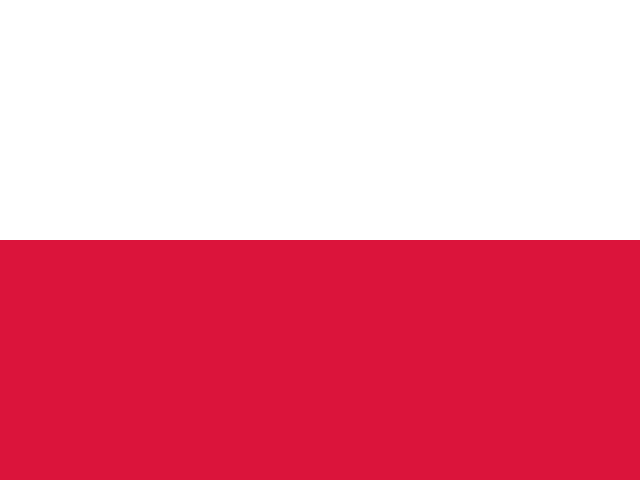 Poland
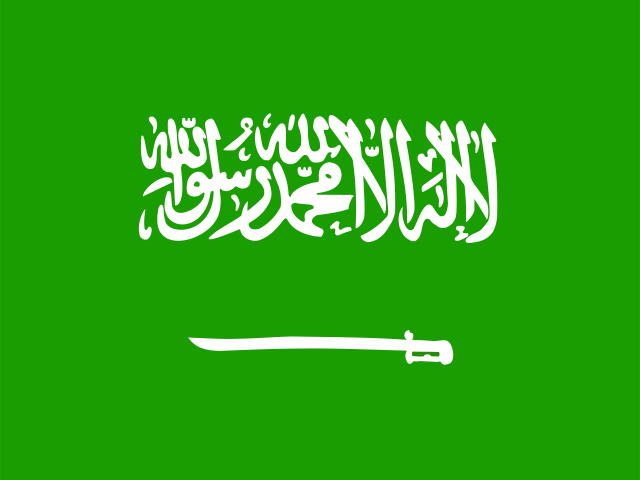 Saudi Arabia
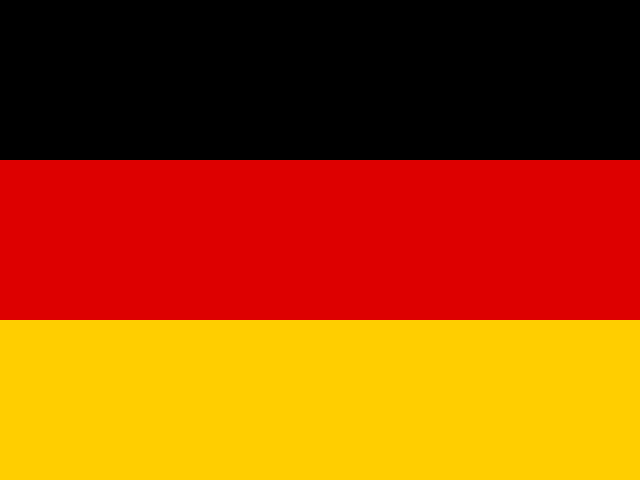 Germany
 United Kingdom
 Austria