
 CountryFrance
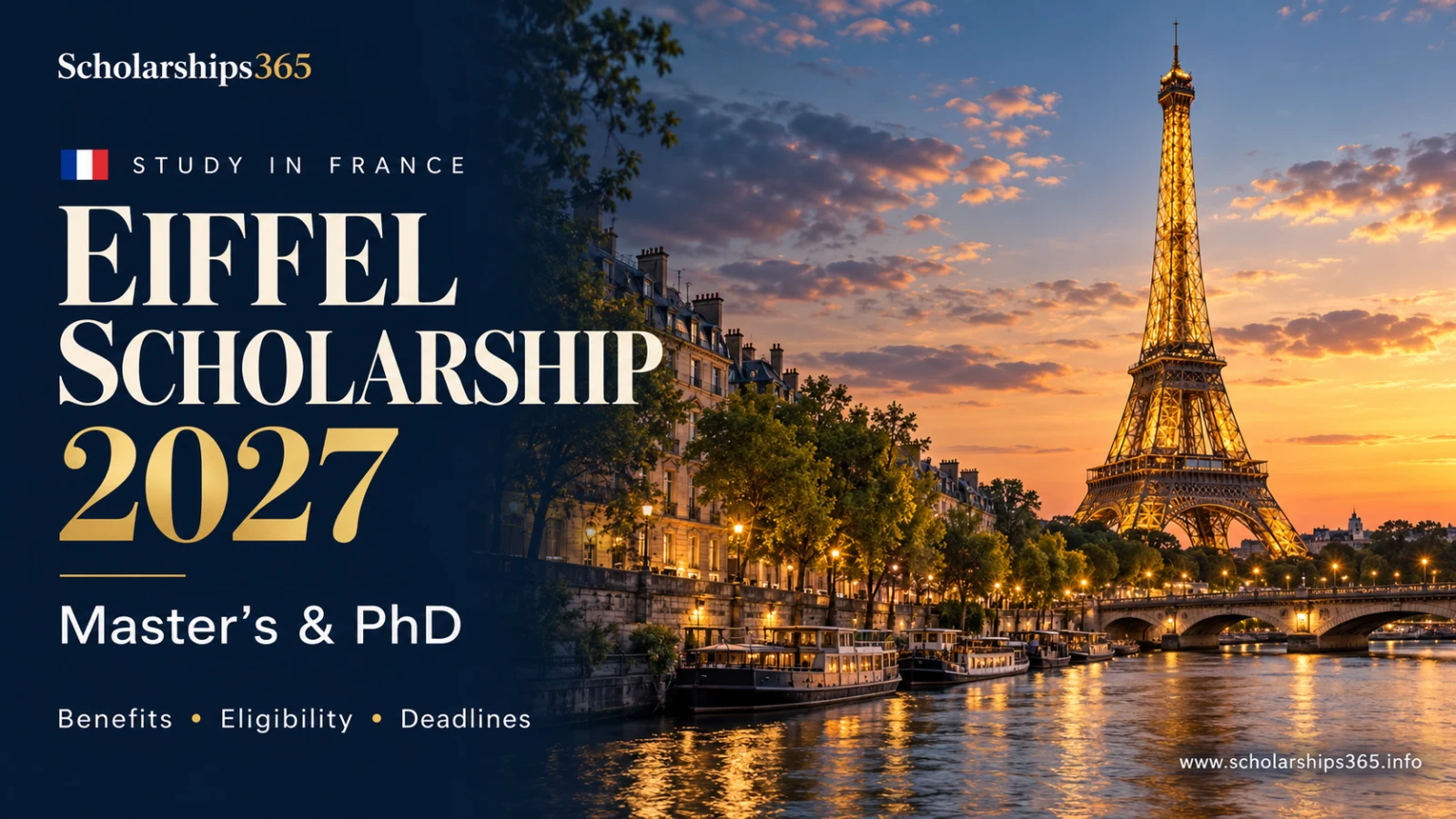
The Eiffel Scholarship 2027 in France offers a fully funded study route for eligible international students when combined with the applicable fee exemption at a qualifying public institution. It supports master’s, engineering and PhD programmes through a monthly allowance and selected travel and support services. The programme is funded by the French Ministry for Europe and Foreign Affairs and managed by Campus France. A French university or higher education institution must nominate you; students cannot submit the national scholarship application themselves.
The 2027 campaign opened on 2 October 2026. According to the official application calendar, French institutions must send their nominations by 6 January 2027. Your university’s student deadline comes earlier and may fall in October or November 2026. Start with the institution’s current call so that you have time to prepare a complete file.
This updated overview explains the available funding, eligible subjects, age limits, documents and university deadlines. Use it to decide whether Eiffel fits your study plans, then follow your chosen university’s instructions. Admission, nomination and the final scholarship award are separate decisions.
Ready to prepare your application? Read our complete Eiffel Scholarship application guide for the nomination process, document preparation and a sample university enquiry.
Eiffel Scholarship 2027: Programme Overview
The host country is France, and the award is intended for eligible postgraduate study at participating French institutions. Each university decides which programmes it will support and how it will select nominees. A course appearing in a university catalogue does not automatically make it eligible for Eiffel.
Eligible degrees and fields of study
The national programme covers seven fields across science and technology, and humanities and social sciences. These are biology and health; ecological transition; mathematics and digital sciences; engineering sciences; history, French language and civilisation; law and political science; and economics and management.
Eligible study can include accredited master’s programmes, engineering qualifications and qualifying doctoral projects. Certain MSc programmes are accepted when they meet the required accreditation conditions. Check the exact degree with the university: Eiffel does not cover every subject, every school or every teaching format.
How long does the scholarship last?
For master’s study, the maximum award is 24 months when entering M1, the first year, or 12 months when entering M2, the second year. An eligible engineering programme can receive up to 36 months. The Paris Cité programme guidance confirms these study routes.
Doctoral awards can last 12, 18 or 36 months, depending on the research stage and supervision arrangement. The 36-month route is intended for eligible first-year doctoral candidates arriving in France for the first time. Shorter awards have specific joint-supervision conditions, so ask the doctoral school which route applies.
Comparing suitable destinations and programmes? Browse our scholarships in France directory, then check the eligibility rules on each provider’s own website.
Financial Benefits and Tuition-Fee Conditions
For master’s and engineering recipients, the published monthly allowance is €1,200. This provides support towards living costs during the approved scholarship period. Prepare a realistic budget for the city where you will study rather than assuming that every personal expense will be reimbursed.
For doctoral funding, the 2027 scholarship regulations list €2,000 per month. However, the current Paris-Saclay Eiffel page lists €2,100. Because official sources differ, obtain written confirmation of the applicable doctoral amount from your nominating institution before making financial commitments.
Additional services include eligible international travel, certain transport costs within France and health coverage under the programme’s conditions. Campus France also helps recipients find accommodation and offers cultural activities. The Toulouse funding guidance describes these services and their limits. Read your award instructions before booking travel or requesting reimbursement.
Housing assistance is not a promise of free accommodation. A room offer, rent, deposit and other charges depend on the housing arrangement. Likewise, access to cultural activities does not mean that every event or leisure expense is covered.
Are tuition fees included?
The Eiffel programme itself does not generally pay tuition fees. French-government scholarship holders taking eligible national degrees or accredited engineering qualifications at qualifying public institutions can receive a registration-fee exemption. Private-school tuition and other programme charges are not automatically covered. Ask for the university’s written fee policy and identify any remaining costs before accepting a place.
Who Can Apply for the Eiffel Scholarship 2027?
The scholarship is open to eligible international candidates worldwide. French nationals are excluded, including applicants with dual nationality that includes French citizenship. The Rennes eligibility guidance also explains restrictions involving previous applications and overlapping scholarships; disclose your full scholarship history to the institution.
For the 2027 selection, the maximum age is 29 for master’s applicants and 35 for doctoral applicants. The stated birth-date cutoffs are after 31 March 1997 and after 31 March 1991, respectively. Use the cutoff for your study level rather than calculating eligibility from an older article.
Applicants already studying in France are not eligible for the master’s component. Doctoral candidates already in France may qualify under the relevant conditions, although applicants studying abroad receive priority. Continuing education, apprenticeship and professional-training routes are excluded; check any other teaching-format restrictions with the university.
Academic excellence and a convincing study or research project matter. Give accurate grades, documented rankings where available and relevant achievements. Never estimate a class rank or claim a guaranteed award. Previous unsuccessful Eiffel applications, earlier awards and other funding can affect eligibility, even when your academic record is strong.
Language requirements and IELTS
There is a route to apply without IELTS when your chosen university accepts alternative language evidence. An English Proficiency Certificate or Medium of Instruction (MOI) letter may be accepted if it meets that programme’s rules. For example, Paris-Saclay’s 2027 doctoral guidance allows proof of previous higher education in the research language as an alternative to a language-proficiency certificate. Confirm acceptance with the programme before applying: this is not a universal IELTS exemption, and French-taught courses may require French-language evidence.
Unsure which language document to prepare? Our English proficiency certificate guide explains the basics; your chosen university must confirm whether it accepts that document.
Documents to Prepare Before Applying
Treat the university’s 2027 checklist as your final document list. Requirements differ between institutions and between the master’s and doctoral routes. The following preparation points help you organise your file, but they do not replace the host university’s instructions.
Master’s application documents
Common items include an identity document, a current CV, academic diplomas, transcripts and evidence of academic ranking. You may also need a current enrolment certificate, language evidence and a career plan. Follow the stated requirements for translations, page limits and recommendation letters. The Rennes document checklist gives a concrete example.
Additional doctoral documents
Research candidates should expect to prepare a thesis proposal, evidence of supervisor support and a funding plan covering the project. An expert assessment or joint-supervision agreement may be needed for the relevant route. Consult the Paris-Saclay document guidance as an example, then use your own doctoral school’s exact checklist.
A useful career plan connects your previous work to the programme you want to join. Mention specific modules, research interests or professional skills, then explain how you intend to use the training. Keep names and dates consistent across documents. Open every uploaded file before submission to confirm that it is readable and complete.
Preparing your academic profile? Use our professional CV guide to organise your education, research and relevant experience clearly before tailoring the document to your application.
How to Apply and Which Deadline to Follow
Start with the French institution
Choose an eligible programme and read its current Eiffel call. Follow the specified university portal, pre-application form or contact procedure. Some institutions require a separate admission application; others begin with scholarship preselection. At Toulouse, master’s applicants use a pre-application form, while doctoral candidates first need a prospective supervisor’s support.
Submit the requested documents before the internal deadline and retain proof of submission. If selected for nomination, respond promptly to corrections and further document requests. Only one institution may nominate you in the same Eiffel selection round. The institution sends the final national file to Campus France.
Eiffel Scholarship 2027 deadlines
For students, the deadline varies by university. These official examples show why the national January date is not your personal application deadline. Recheck the linked call for programme-specific instructions and time-of-day requirements.
At Université Paris Cité, master’s applications close on 29 October 2026 and doctoral applications on 2 November 2026, both at 23:59 Paris time.
At the University of Rennes, the deadline is 6 November 2026. Doctoral pre-applications must arrive by 12 noon, Paris time.
For the University of Toulouse, master’s pre-applications close on 15 November 2026 and doctoral pre-applications on 29 November 2026.
The Campus France institutional deadline is 6 January 2027. Results are expected during the week of 12 April 2027, according to the 2027 campaign calendar. Keep monitoring the email address used in your application and follow official instructions after selection.
For a wider preparation checklist, explore our scholarship application guidelines. Build your schedule around the university’s deadline and leave time for references, translations and corrections.
Information reviewed on 15 October 2026. This page summarises the 2027 call; your nominating institution and official award documents determine the final requirements and funding conditions.
Frequently asked questions
Is the Eiffel Scholarship 2027 open to applicants worldwide?+
Eligible foreign nationals can be considered from around the world. Applicants must also meet the age, study-location and academic requirements. Holding French citizenship, including through dual nationality, makes a candidate ineligible.
Can I submit an Eiffel application directly to Campus France?+
No. You apply through a French higher education institution, which decides whether to nominate you. Follow its student-facing procedure rather than trying to use the institutional submission portal yourself.
What is the student deadline for the Eiffel Scholarship 2027?+
Your deadline is set by the university and can be weeks before the national deadline. French institutions must submit their nominated files by 6 January 2027. Check the university examples above and confirm the date for your programme.
Does the Eiffel Scholarship pay all tuition fees?+
The programme does not generally pay tuition fees directly. Eligible government scholars at qualifying public institutions can receive a fee exemption. Confirm any private-school charges or other costs with your university before accepting an offer.
Is IELTS mandatory for every Eiffel applicant?+
Language requirements vary by course and institution. Applying without IELTS may be possible if your programme accepts an English Proficiency Certificate, an MOI letter or another approved qualification. Get confirmation from the university; acceptance for one programme does not create a waiver for every Eiffel applicant.
How much is the Eiffel Scholarship monthly allowance?+
The master’s allowance is €1,200. For PhD study, the 2027 regulations state €2,000, while some official university pages still display €2,100. Obtain confirmation of the doctoral amount from your institution and award documentation.
When are Eiffel Scholarship 2027 results expected?+
Campus France’s published calendar gives the week of 12 April 2027. A university’s internal preselection result comes earlier and is not the final scholarship award. Keep checking official emails for the decision and next steps.
Prepare your application
This workspace organises the verified facts from the guide above. Check items as you prepare; progress is stored only on this device.
Required documents
Steps to complete
Listed benefits
- Master’s monthly allowance: €1,200
- PhD allowance: 2027 regulations list €2,000; some official university pages list €2,100, so obtain written confirmation
- Eligible international travel and certain domestic transport
- Health coverage under programme conditions
- Accommodation-search assistance, not guaranteed free housing
- Access to selected cultural activities under applicable conditions
- Registration-fee exemption for eligible degrees at qualifying public institutions; tuition is not generally paid directly by Eiffel
- M1 funding up to 24 months; M2 up to 12 months; eligible engineering study up to 36 months
- PhD funding for 12, 18 or 36 months depending on the route
Coverage can change. Confirm every benefit in the official award terms.
Varies by program
Opening: October 2, 2026. Confirm the final date and timezone on the official source before submitting.
Confirm the exact deadline for your chosen program on the official source.
Verify the latest requirements before applying
Scholarships365 explains the opportunity; the provider’s website remains the final authority.